
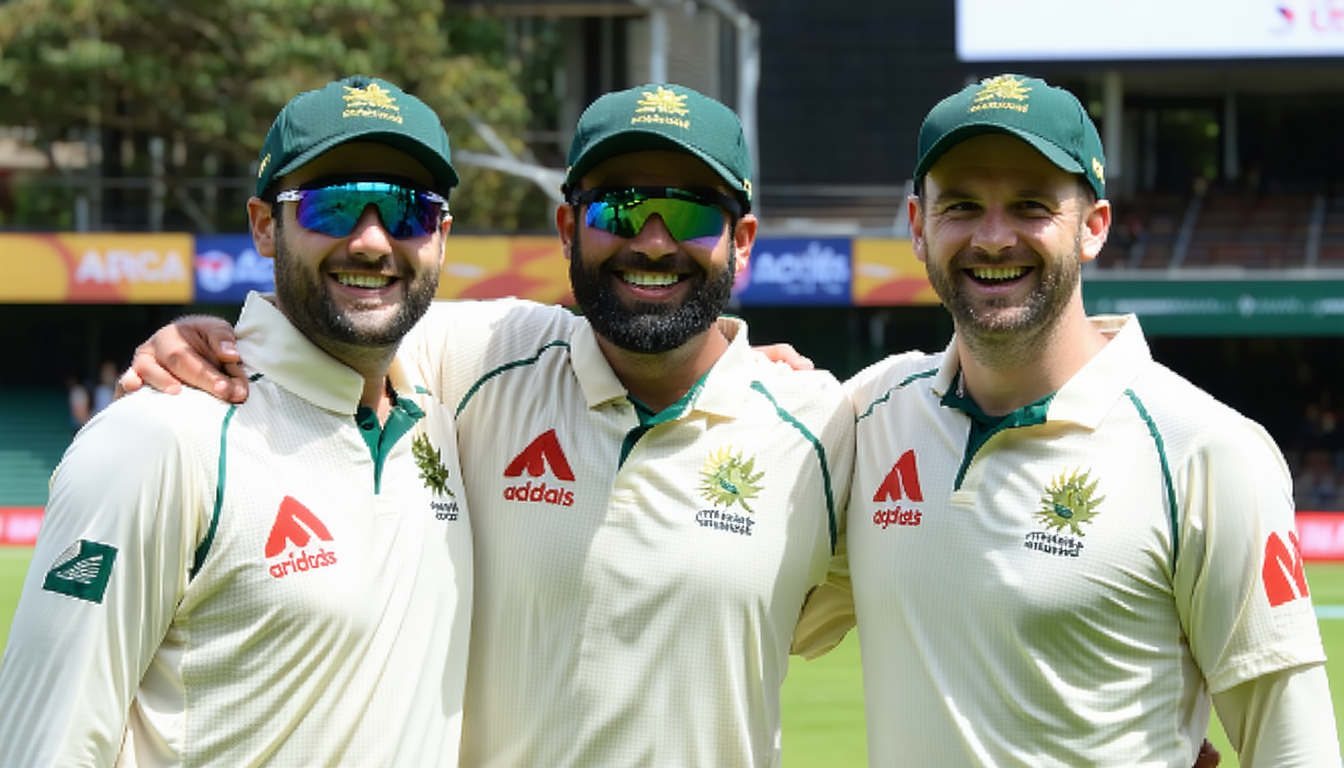

Cricket in South Africa is much more than a sport—it’s a patchwork of triumph, heartbreak, and hope. The South Africa national cricket team, fondly called the Proteas, sits at the heart of this narrative. Their journey hasn’t been straightforward—filled with both legendary brilliance and, to be honest, more than a few missed chances (just ask any SA fan about World Cup heartbreaks and you’ll see instant reactions!).
Proteas’ Rise: The Journey from Isolation to Modern Powerhouse
The history of the South Africa national cricket team is anything but dull. The team made its debut in 1889, but the country’s apartheid policies led to sporting isolation from 1970 until the early 1990s. That’s nearly two decades lost from the international stage.
When they returned—post-1991—expectations were mountainous. The world wanted to see if the new “Rainbow Nation” could match up with cricket’s best. The truth? They did, mostly. South Africa quickly cemented itself as a tough competitor, blending raw, natural talent with a fierce competitive streak.
And yet, even today, opinions are split. Was it the right call to aggressively phase in new players after readmission? Did the focus shift too soon from established stars to young talent? People in Cape Town pubs and Gauteng’s cricket circles still debate it, sometimes rather loudly.
Key Players: Stalwarts & Fresh Faces
The list of legends who’ve worn the green and gold could fill pages—yet, a few names leap out without much debate.
Batting Greats
- Jacques Kallis: Honestly, some say the greatest all-rounder ever. He’s right up there, right?
- AB de Villiers: A phenomenon. Did things with the bat that just looked impossible.
- Graeme Smith: His leadership during a rocky period steered the team to historic wins abroad.
And then you get someone like Herschelle Gibbs—a game-changer on his day, unpredictable, sometimes controversial (but who isn’t, really?).
Bowling Icons
- Allan Donald: The “White Lightning.” His pace and aggression—pure adrenaline on a cricket field.
- Shaun Pollock: If you wanted reliability and line-and-length mastery, Polly was your go-to.
- Dale Steyn: Consistently terrifying for batters—peak Steyn was electric.
And right now, the likes of Kagiso Rabada and Anrich Nortje suggest the SA pace tradition isn’t slowing down.
“For a long time, South Africa’s fast bowlers have set the global benchmark, both in variety and sheer impact,” observes former England captain Michael Vaughan.
Recent Standouts
Lungi Ngidi, Reeza Hendricks, and Aiden Markram have brought new energy and raised hopes. It’s a compelling mix—there’s a sense that another golden era could be right around the corner, but well, South African fans have felt this before, and know not to get too carried away too fast.
Team Stats: Ups, Downs, and the ‘Chokers’ Tag
Statistics are a mixed bag for this team. In the long form of the game, South Africa’s Test record has been formidable—winning series in Australia and England, something not many can claim. Their overall win percentage in Tests and ODIs regularly sits among the top three globally.
White-ball cricket, though, exposes the nerves. South Africa’s World Cup story is legendary for the wrong reasons—rain rules, semi-final collapses, “chokers” taunts from rival fans. Yet, there’s subtlety here. Stats show that in group stages, they’re routinely dominant; it’s the knockouts, those do-or-die situations, that seem to steal their nerve.
Noteworthy Stats:
- Most Test runs: Jacques Kallis (over 10,000 runs)
- Most ODI wickets: Shaun Pollock (in the ballpark of 393 wickets)
- Record ODI scorer: AB de Villiers—strike rate out of this world, especially at his peak
- T20 heroics: South Africans hold multiple records for fastest fifties and centuries
It’s not just the big names. Several players have stepped up in crucial, if less splashy, ways—think David Miller’s clutch finishes, or Quinton de Kock’s dazzling starts.
News & Controversy: Honestly, There’s Plenty
If you follow SA cricket for just a week, you notice something: there’s always something. In recent years, debates have centered around transformation targets (measures to improve racial diversity), selection politics, and—yes—the spotty performance in major ICC tournaments.
Some feel quotas are vital, correcting historic imbalance. Others argue merit should trump everything. It’s, frankly, emotional territory, and the wider South African story always bleeds into cricket.
Outside politics, leadership changes seem almost constant. Coaches don’t last more than a few years. The ODI captaincy has even changed hands mid-tournament. These are not signs of stability—but sometimes chaos breeds opportunity.
South African cricket’s relationship with the fans is similarly unique. For every fair-weather supporter, you’ll find a diehard Protea loyalist. Some still pine for the “old guard”; others only look forward.
Memorable Records and Iconic Moments
Let’s remember the fun stuff, too. The South Africa national cricket team has delivered moments etched in cricket folklore:
- The 438 Game—that extraordinary ODI chase against Australia in 2006 that shattered records and (for a few days) made even rugby fans talk cricket.
- Allan Donald’s last-gasp semi-final run-out in the 1999 Cricket World Cup. Painful, but iconic.
- Steyn’s spellbinding spells in the subcontinent—proof that pace can win Tests anywhere.
- Mark Boucher’s world record for wicket-keeping dismissals.
No matter what, the team has provided drama with a capital D.
The Future: Room for Optimism or More Groundhog Day?
Right now, South African cricket feels like it’s on the verge—maybe of a major breakthrough, maybe another frustrating semi-final. There’s new young talent, yet depth (and talent loss to overseas leagues) remains a nagging worry.
There’s a sense—shared by fans and ex-pros—that if the Proteas can solve their mental block in big matches, they could finally lift that ICC trophy that’s always eluded them.
At the end of the day, maybe it’s the journey, the wild unpredictability, and those rollercoaster emotions that make following the South Africa national cricket team so compelling. Not perfect, and maybe that’s why it matters so much.
Conclusion
South Africa’s national cricket team embodies resilience, diversity, and undimmed hope. Their stats rival any in the world, their legacy is rich, and their ability to spark conversation is unmatched. Whether wrestling with controversies or celebrating historic wins, the Proteas remain a team that defies easy summary—always evolving, always dramatic, and always worth watching.
FAQs
Who is the most successful South African cricketer?
Jacques Kallis is often regarded as South Africa’s greatest, boasting outstanding records as both a batsman and a bowler.
Why is South Africa called the Proteas?
The team’s nickname comes from the protea, South Africa’s national flower, symbolizing diversity and beauty.
What is South Africa’s biggest cricket achievement?
Many consider their historic Test series wins in Australia and England as landmark moments, though a global ICC trophy still eludes them.
Has South Africa won the Cricket World Cup?
No, despite strong performances in group stages, South Africa has never captured an ICC senior World Cup, leading to their unfortunate “chokers” tag.
How does transformation policy affect team selection?
Transformation policies aim for racial diversity and inclusion, leading to passionate debate on balancing merit and opportunity in the squad.
Who are the emerging stars in South African cricket?
Kagiso Rabada, Aiden Markram, and Lungi Ngidi are among the young players generating buzz and hope for fresh success.





Leave a comment