
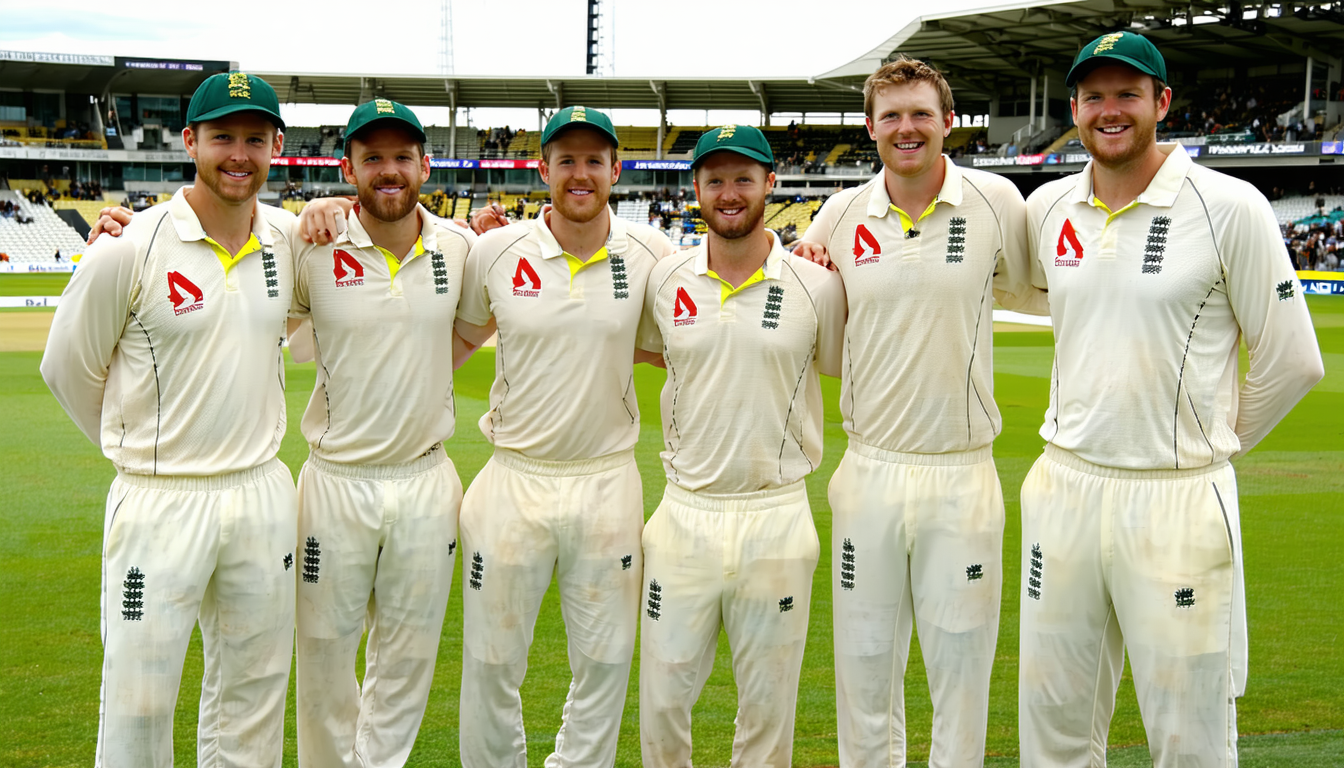

It’s honestly hard to explain in just a couple of paragraphs what Australia versus England actually means in cricket. It’s dates back to the days before hot dogs were, well, even invented. This rivalry can be funny and tense, classic and shocking, all at the same time. The very idea of the Australian men’s cricket team facing the England cricket team gets hearts racing from Melbourne to Manchester, and pub arguments can get… well, let’s just say they can get a bit rowdy. If you’ve ever watched an Ashes match with a group of cricket fans, you probably know there’s a huge history behind every ball bowled.
This timeline’s not just about wickets and scores. It’s about how two nations shaped the sport itself while, frankly, having a bit of a love-hate thing. The story isn’t perfect either—rude sledges, rain delays, shock collapses—it’s all in there. But that’s what makes it real, right?
The Beginning: 1800s and the Dawn of the Ashes
Cricket between Australia and England started in 1877, with the first official Test match at the Melbourne Cricket Ground. Back then, players wore mustaches you could lose a ferret in, and a blue-riband game between these two sides was regarded as, “a pretty big deal,” according to newspaper archives.
The turning point? In 1882, England lost to Australia at The Oval, London. Seemingly minor, but it led to a mock obituary in The Sporting Times that announced the “death” of English cricket—and the ashes would be taken to Australia. Thus, the Ashes series was born:
- 1877: First Test cricket match between Australia and England—Australia wins.
- 1882: The Ashes legend begins after England’s defeat.
- 1882–83: The first Ashes series is officially played.
From the get-go, this wasn’t your typical friendly. The intensity was already baked in, with Australians eager to prove their mettle against what was then seen as the imperial “mother country.” Some say rivalries mellow with age. Not this one.
The Early 20th Century: Heroes and Drama on Both Sides
Throughout the early 1900s, the men’s cricket teams of both countries became obsessed with outdoing each other. Australian all-rounder Warwick Armstrong and English bowler Sydney Barnes—these are names that still echo in cricket chatter today.
The 1932–33 ‘Bodyline’ series remains the rivalry’s most infamous moment. England, under captain Douglas Jardine, devised a fast, short-pitched bowling strategy aimed at Australia’s Don Bradman—arguably cricket’s first global superstar. The plan was dangerous and sparked controversy even in Parliament.
“Bodyline was beyond cricket. It was a battle of will, a question of where the line between fair and unfair sits,” said a renowned cricket historian (name conveniently forgotten in the rush of stories).
- 1928–29: England whitewashed Australia, sparking years of soul-searching down under.
- 1932–33: Bodyline tactics sour diplomatic relations.
- Late 1930s: Don Bradman’s batting becomes the stuff of legends. His famous average: 99.94.
It’s easy to romanticize the past, but these were real scandals and real sporting achievements, not just folklore.
Post-War Era: Renewed Rivalry and Famous Series
After WWII, cricket was a different beast, with both teams rebuilding. Australia’s ‘Invincibles’ tour of 1948, led by Bradman, saw them undefeated in England. This achievement still gets brought up at BBQs by old blokes in baggy green hats.
In the 1950s and ’60s, Freddy Trueman, Richie Benaud, and Alan Davidson swapped blows. Some of the closest matches in Ashes history happened during this period:
- 1956: Jim Laker took 19 wickets in a single Test—something no one’s done since.
- 1965: Series ends in a draw, reflective of evenly-matched strengths.
The balance of power shifted frequently. Sometimes Australia were on top, sometimes England. No script, just raw competition.
The Modern Era: Media, Mind Games, and Iconic Moments
From the 1980s onward, the Australia-England cricket rivalry got a modern, louder edge. The media hype became unstoppable, fueled by personalities like Ian Botham and Allan Border.
1980s–1990s: The Australian Era
Australia dominated throughout the 1990s, with legends like Shane Warne, Glenn McGrath, and Ricky Ponting. It wasn’t even fair at times—some England sides arrived looking beaten before the first Test.
- 1989–2007: Ashes firmly in Australian hands almost continuously.
- 1993: Warne bowls the “Ball of the Century” to Mike Gatting. That clip has more YouTube views than some pop songs.
But England eventually struck back, as all good stories demand.
2005: The Greatest Ashes Series?
Sporting journalists argue a lot about the best Ashes series ever, but 2005 is regularly mentioned. England famously won 2–1 after a roller-coaster of matches and edge-of-your-seat drama.
“2005 challenged expectations—showing that no dynasty, no matter how established, is really unbreakable,” remarked a BBC cricket pundit.
This was cricket as adrenaline-pumping theatre, not just sport.
2010s to Now: Even Contests, New Legends
Cricket has gone global, but the Ashes remains oddly old-fashioned and relevant. In the 2019 edition, Ben Stokes’ Headingley heroics and Steve Smith’s incredible run-scoring made headlines everywhere.
The current era sees more even contests. No one’s permanently dominant. Key moments keep new generations hooked:
- 2019: Ben Stokes pulls off a miracle at Headingley, rescuing England from the brink.
- 2023: Ashes series drawn 2-2 after five classic, see-saw Tests. The banter hasn’t stopped since.
Cultural Impact: Beyond the Pitch
For fans, the rivalry’s as much about memes, sledges, and tradition as it is about cricket. Some Australians still grumble about “ball-tampering,” while English supporters won’t let the “underarm bowling incident” of 1981 go. It’s family squabble vibes, but with millions watching.
Cricket’s language, from “baggy green” to “sticky wicket,” is full of Australia-England legacy. No marketing strategy could ever really capture how this bi-national tug-of-war shaped modern Test cricket.
Conclusion: Timeless, Sometimes Messy, Always Unpredictable
The timeline of the Australian men’s cricket team versus the England cricket team is more than a record of scores; it’s a living, evolving saga. There’s romance, heartbreak, near-misses, and the odd bit of chaos. Ask ten fans for the “best moment” and you’ll probably get ten different and quite passionate answers—plus, a heated argument or two.
This rivalry will keep defining new legends and new controversies. How can it not? As long as there’s an Ashes urn, an overcast day at Lord’s, and the sound of barmy cheers, this story’s just beginning its next chapter.
FAQs
Why is the Australia vs England cricket rivalry called the Ashes?
The term “the Ashes” comes from a satirical obituary published in 1882 after England lost to Australia at The Oval. It joked that English cricket had died and “the body would be cremated and the ashes taken to Australia,” creating the trophy and narrative that’s lasted since.
Who has won more Ashes series overall, Australia or England?
Both teams have enjoyed periods of dominance, with the overall series tally very close. Australia has a slight edge in total Ashes series wins, but the competition remains highly contested.
What was the ‘Bodyline’ series and why was it controversial?
The 1932–33 Ashes series saw England use aggressive fast-bowling tactics called “bodyline” to target Australian batsmen, especially Don Bradman. It led to diplomatic tensions and changed cricket rules to prioritize player safety.
Which Ashes series is considered the most exciting in modern times?
Many point to the 2005 Ashes as the modern high point, with dramatic games and a narrow English victory against a favored Australian side. The 2019 series also thrilled, especially Ben Stokes’ performance at Headingley.
Have there been any significant controversies in the rivalry?
Absolutely. Notable moments include the Bodyline series, the underarm bowling incident in 1981, and debates over ball-tampering in the 2010s. These controversies have only fueled the rivalry’s intensity.
Is the rivalry still relevant with new cricket formats like T20?
Definitely. Even as T20 and franchise cricket boom, the prestige of the Ashes remains undiminished. Fans and players alike still treat Australia vs England Tests as the ultimate proving ground.






Leave a comment