
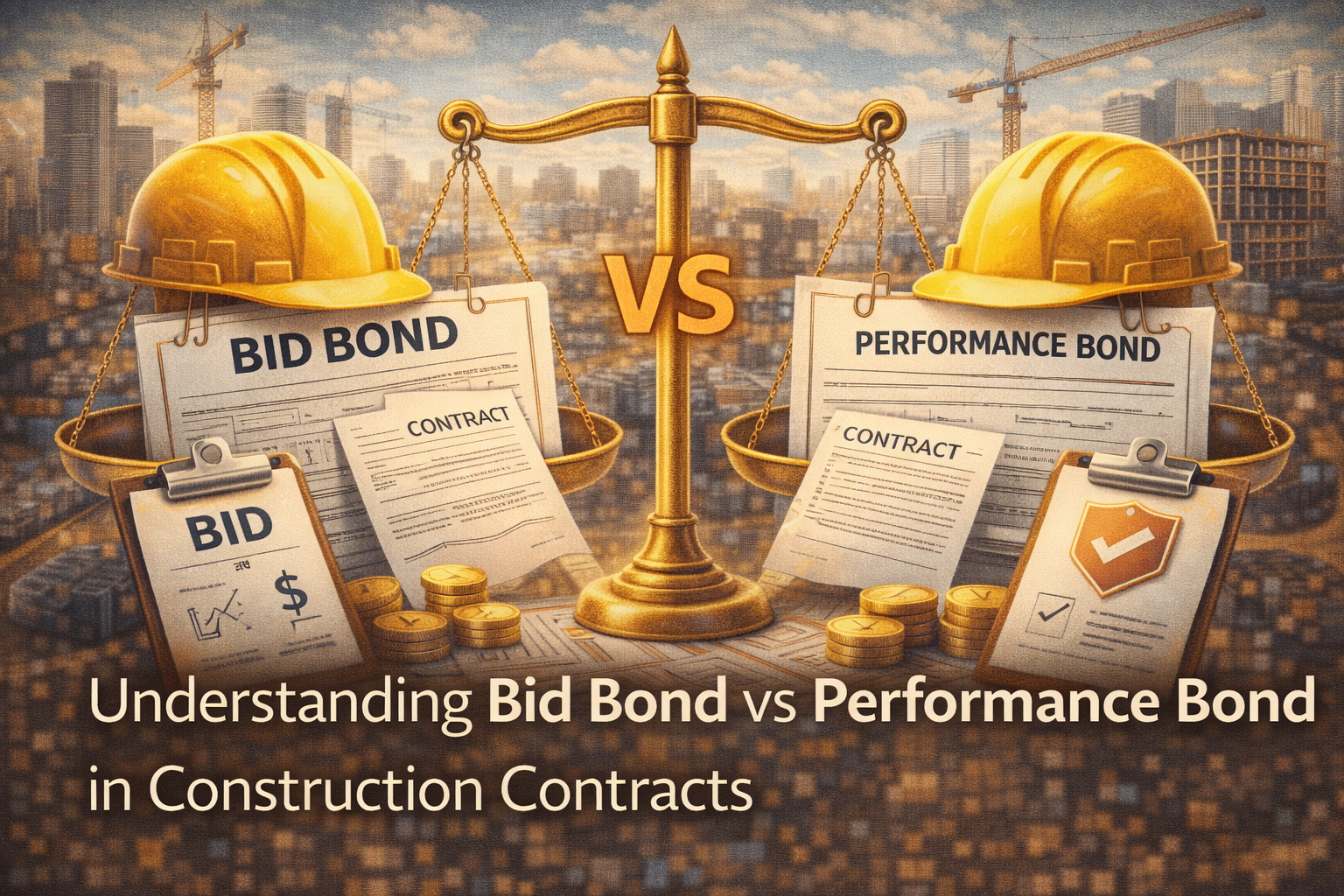

Understanding the difference between a bid bond vs a performance bond helps contractors and project owners manage financial risk and maintain stable project execution.
Both instruments belong to the broader category of Contract Bond, yet each operates at a different stage of the construction process. As a result, both create a structured framework that supports compliance and reduces uncertainty.
How a Bid Bond Works
Contractors submit a Bid Bond with their proposal. This instrument assures the project owner that the bidder will sign the contract and provide the required performance and payment bonds if awarded.
If the contractor withdraws or refuses to proceed, the surety bond company compensates the project owner for the difference between the defaulting bid and the next lowest bid.
This process discourages speculative offers and supports transparent tendering. It also gives contractors a path to secure the final bonds once they win the award.
How a Performance Bond Works
After the contract award, the project owner requests a Performance Bond. This instrument guarantees that the contractor will meet deadlines, quality requirements, and all terms in the agreement.
If the contractor fails to deliver, the surety steps in, compensates the project owner, or arranges completion. Public and private projects use this bond to avoid delays and protect funds allocated to the work.
While rates vary, contractors usually pay a percentage of the contract value based on their financials, credit information, and project history.
What Is the Difference Between a Bid Bond and a Performance Bond?
| Aspect | Bid Bond | Performance Bond |
| Project Phase | Issued during the bidding or tendering stage to secure the proposal. | Required after the contract is awarded to guarantee project completion. |
| Primary Purpose | Ensures the contractor will honor their bid and sign the contract if selected. | Ensures the contractor will complete the project according to the contract terms. |
| Who It Protects | Protects the project owner from bidders who withdraw or fail to sign the contract. | Protects the project owner from financial loss, delays, or contractor default. |
| When It Activates | Activates when the contractor submits the bid. | Activates once the contractor signs the project contract. |
| Beneficiary | Project owner or the entity managing the tender. | Project owner or client receiving the completed work. |
| Financial Coverage | Usually covers 5%–10% of the total bid amount. | Typically covers 100% of the project’s contract value. |
| If the Contractor Fails to Comply | Surety covers the difference between the defaulting contractor’s bid and the next lowest bidder. | Surety completes the project or reimburses the project owner for completion costs. |
| Duration of Coverage | Valid until contract award, then replaced by the Performance Bond. | Remains active until the project is completed and accepted. |
| Type of Risk Covered | Non-compliance or withdrawal during the bidding stage. | Non-performance or delays during the construction phase. |
Why Project Owners Rely on These Bonds
Project owners depend on these bonds to avoid financial losses, delays, and disputes. Public entities use them to safeguard taxpayer money, while private owners use them to secure contract performance.
In both cases, these guarantees enable predictable project development and reduce exposure to default. Contractors also benefit because the bonding process encourages better financial management and long-term operational planning.
Strengthening Projects Through Clear Guarantees
When evaluating bid bond vs performance bond, contractors and project owners gain clarity about risk at each project phase.
The Bid Bond protects bidding integrity, while the Performance Bond protects contract execution. Together, these instruments support reliable construction outcomes and strengthen trust between all parties involved.







Leave a comment