
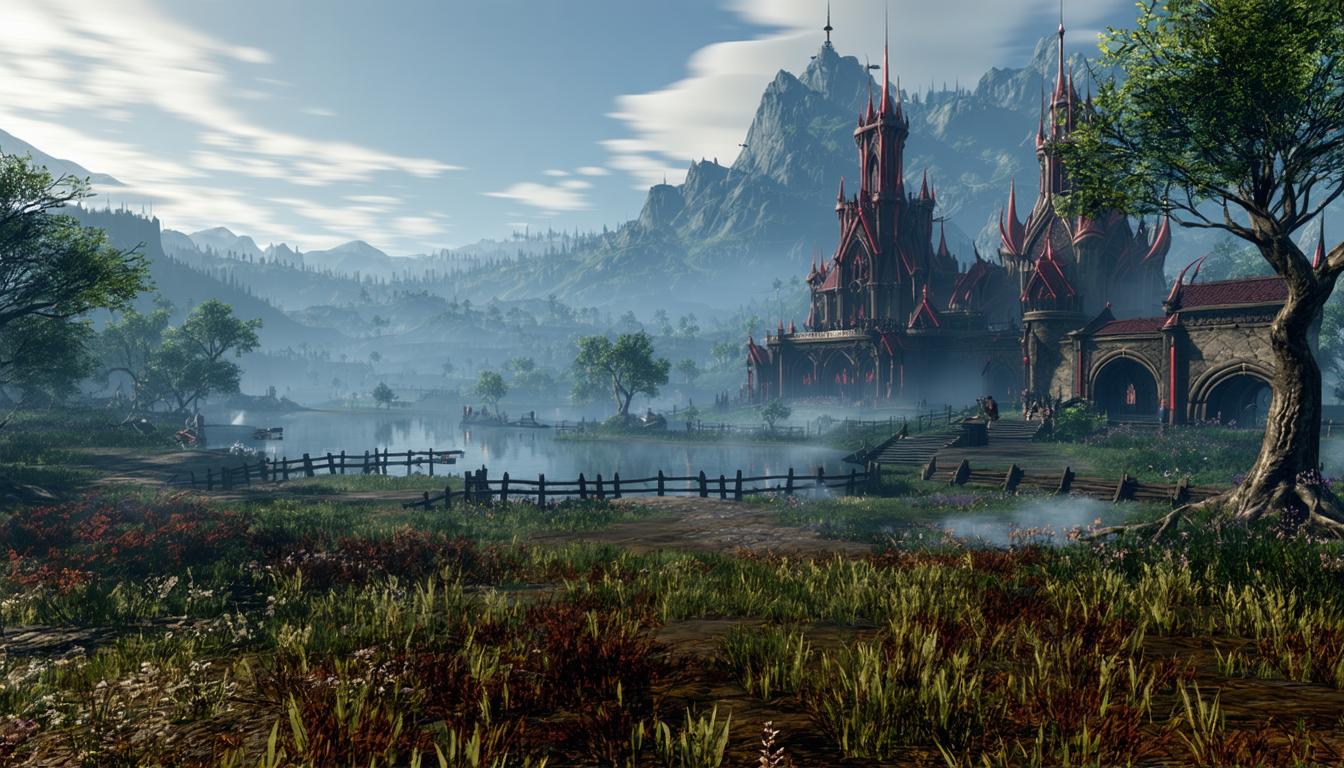

Diving into Ashes of Creation feels like stepping into a fantasy novel you helped write—where the very landscape responds to your footsteps, your choices, your ambition. This emerging MMORPG, developed by Intrepid Studios, presents a reactive, evolving world that demands engagement at every level. It’s not about following a predetermined path; it’s about shaping that path yourself. Through ambitious systems like nodes, sieges, and player-driven economy—this game isn’t just played. It’s co-authored with every participant.
Here, imperfections aren’t polished away—they’re part of the story: rough edges on early access, unexpected drama in community politics, that gleeful moment when you raid a caravan only to be ambushed by friends—or foes. Let’s explore the heartbeat of Verra and see why Ashes of Creation feels both familiar and startlingly new.
The Living World of Verra
Nodes: Cities That Grow or Fall by Your Hand
The node system stands out as the promise—and risk—that defines Ashes of Creation. In Verra, player actions fuel development. Completing quests, killing monsters, or gathering resources breathes life into nearby nodes, which evolve through seven stages from Wilderness to Metropolis. Each stage introduces housing, crafting stations, political options—rooting gameplay in a shared world, not a static menu.
But here’s the nuance: these aren’t just labels. If players slack off or get wiped in sieges, nodes can regress or even collapse—painting a vivid picture of a world that can crumble just as easily as it grows.
Diversity Through Design
Not all nodes are created equal. There are Scientific, Economic, Military, and Divine types—each granting distinct benefits to citizens. This means choosing a node isn’t just about location; it’s about shaping the world’s character and your own role in it. One player might drive trade; another might become the city’s religious or cultural heart. The world adapts to you, and you adapt to that world.
Archetypes, Combat, and Character Customization
A Customizable Class System
In Ashes of Creation, you start with one of eight archetypes—Tank, Cleric, Mage, Fighter, Rogue, Ranger, Bard, or Summoner—and by level 25, you select a secondary archetype to craft hybrid classes. Suddenly, you’re not just a Rogue—you’re Rogue-Cleric or Mage-Bard, with unique abilities and synergies that other players don’t emulate. This opens up meaningful individuality in play styles.
Hybrid Combat for Modern Players
Combat mixes classic tab-targeting with action-based elements: timing matters, positioning counts, and you can switch between styles depending on context. This invites a more interactive player experience—especially when coordinating in sieges or confronting Harbinger corruption in the field, where those choices can mean survival or collapse.
PvE, PvP, and the Edge of Risk
Harbinger System and Environmental Threats
On top of node politics, corruption enters the world via the Harbinger System. Ancient evils spread across zones in escalating waves, turning a once-peaceful landscape into a battlefield. Players face void-touched foes, massive commanders, and collapsing zones that reward risk-takers with rare loot—if they survive. The drama isn’t just what players do to each other—it’s how they respond when the world itself turns hostile.
Sieges, Caravans, and Player Conflict
Large-scale PvP isn’t optional. You can choose trade or war. Caravans haul goods across contested terrain—attractive targets for both opportunistic bandits and strategic guilds. Node sieges can raze cities to the ground, triggering ruin phases where looting and chaos rule, dramatically altering the server’s political map.
That isn’t to say it’s all swords and griefing. A corruption system creates risk—if you attack innocents, consequences follow. But it’s still an open world with high stakes, not separations between “safe” and “combat” zones.
Economy, Crafting, and Player Governance
A Living, Player-Driven Economy
Players aren’t just fighters—they’re gatherers, crafters, traders. The economy moves through gathering, processing, crafting, and trading—often across regions. As nodes evolve, resources shift, creating dynamic supply chains and demand.
Balanced collaboration is key—artisans and merchants rely on each other, and guilds or civic leaders can dominate through economic power just as easily as military might.
Political Systems and Player Authority
In many nodes, citizens participate as much as leaders. As nodes grow, roles emerge: mayors, councils, defenses. Even small-scale citizens have a stake—whether taxes, property ownership, or civic duty. That again drives home how deeply player agency fuels both gameplay and narrative.
Development, Community, and Real-World Friction
Early Access Reality Check
Ashes of Creation entered Early Access via Steam on December 11, 2025. It remains in Alpha Two, full of prototypes, tuning, and frequent realm wipes. This isn’t a polished final product; it’s a raw, evolving sandbox.
Drama Behind the Screens
In early 2026, Intrepid Studios faced turbulence: around nine employees were laid off on January 22. Even more striking, on January 31, creative director Steven Sharif resigned in protest—citing ethical disagreements with the studio’s board. That real-world drama echoes the in-game tension: creative dreams meeting financial and management realities.
Community Voices and Early Access Feedback
Players are polarizing in their feedback. Some celebrate the node system, the emergent PvP, the evolving economy. Others cite grinding, lack of structured content, unfinished features, and empty world spaces. It feels unpredictable—and in a way, that’s modern MMORPG development in 2026: hopeful, messy, and thrilling.
“Every citizen can participate in sieges—no matter how small or ‘insignificant’—because their resources and homes are at stake.”
That quote illustrates a powerful principle: this is an MMO where being small doesn’t render you irrelevant. Community investment matters.
Conclusion: Choosing Your Path in Verra
Ashes of Creation stands out for its bold ambition: a world shaped by players, fraught with political upheaval, economic maneuvers, and threats both external and existential. It’s rough around the edges—early access, internal studio strife, incomplete systems—but the roughness underscores the core: player impact matters. Choose to build, dominate, explore, exploit. Your story is wrapped in every siege, every node, every drop of resource you carry.
As development continues through 2026 and beyond, those looking for emergent storytelling, sandbox politics, or reactive landscapes should keep a close eye on Verra. It may just grow into one of the most memorable, unpredictable MMORPGs in years.
FAQs
What exactly are nodes, and why do they matter?
Nodes are player-influenced locales that evolve—from wilderness to metropolis—based on actions like questing or crafting. Their stages unlock housing, markets, political roles, and more, making them the backbone of player-driven world-building.
How does the class system encourage customization?
Start with one of eight archetypes, then add a second at level 25, yielding up to 64 unique class combinations. This encourages deeply personalized playstyles rather than cookie-cutter builds.
What kind of PvP exists in the game world?
Expect open-world PvP—raiding caravans, sieging towns, and combat tied to morality systems (corruption). There are no fully safe zones, so even traveling through towns carries risk.
Isn’t the game still in development? Is it stable?
It’s very much in development—in Alpha Two via Early Access on Steam. Players should expect frequent updates, balance changes, bugs, server wipes, and evolving features.
How has the studio’s recent upheaval affected development?
In early 2026, layoffs and leadership resignations—including creative director Steven Sharif—introduced uncertainty into the project’s future. However, Intrepid Studios has stated development continues without pivoting from the core vision.
Is crafting or economy actually vibrant?
Yes—but complicated. Crafting is deep and interconnected; gathering, processing, and trading require time, skill, and often cooperation. The economy feels real—but is also a grind, especially early on.









Leave a comment