
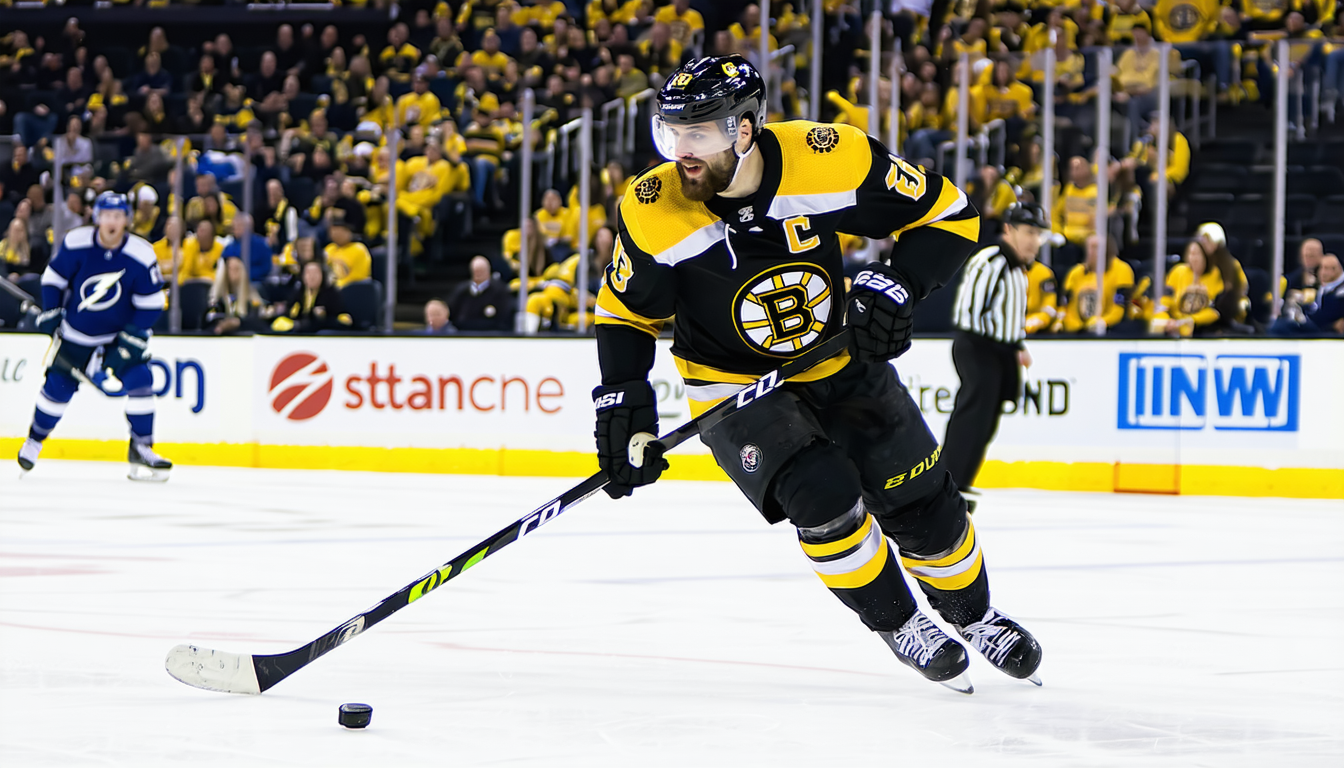

It’s the kind of spectacle hockey fans savour—outdoor, unpredictable, and dripping with drama. The Boston Bruins and Tampa Bay Lightning clashed under the open sky at Raymond James Stadium on February 1, 2026, in what turned out to be one of the most unforgettable NHL Stadium Series games. Sun bleached the ice, winds flirted with pucks, and temperatures hovered in the high 30s—quite a setting for an NHL showdown in Florida, certainly not common fare. The NHL even used a special climate-controlled tent to preserve the ice surface.
Forget routine form guides or Vegas spreads—this was one for the ages.
Game Flow & Historic Comback
Tampa Bay struck immediately. Brandon Hagel scored just 11 seconds in, setting a record for the fastest goal in outdoor NHL game history. Still, Boston would respond in kind: Alex Steeves, Morgan Geekie, and Viktor Arvidsson piled on three unanswered goals, giving the Bruins a 3-1 first-period lead.
By mid-second period, Poitras and Geekie added two more goals—Boston seemed in control. But the tide turned abruptly. A rare—and wildly theatrical—goalie fight broke out between Jeremy Swayman and Andrei Vasilevskiy, spurred by a post-whistle scuffle. It marked the first goalie fight ever in an NHL outdoor game. That flashpoint seemed to ignite Tampa Bay’s comeback. They notched three straight power-play goals from Oliver Bjorkstrand, Darren Raddysh, and Nick Paul.
Nikita Kucherov then tied it, sending the game to a shootout. Jake Guentzel delivered the decisive goal in the shootout’s third round, sealing an improbable 6–5 Lightning victory—marking the largest comeback in both outdoor NHL game history and Lightning franchise history.
Atmosphere & Attendance
Over 64,000 fans packed Raymond James Stadium, witnessed the drama, and clinched their place in hockey lore. The cold Florida night, the historic comeback, even the goalie fight—all ingredients for a classic outdoor spectacle.
Tactical Analysis: What Fueled the Turnaround?
Special Teams Swung Momentum
Tampa Bay was clinical on the power play, delivering three consecutive strikes that erased Boston’s lead. On the other side, the Lightning’s penalty kill had already proven adept—boasting the second-best kill percentage in the league. Once the momentum shifted, Boston struggled to stop the bleeding.
Goaltending Collision Course
Swayman and Vasilevskiy had both played key roles leading into the game. Swayman anchored the Bruins with 22 wins and a GAA near 2.87, while Vasilevskiy, a perennial Vezina finalist, was atop the minutes and wins charts for Tampa Bay. Their collision—both physical and metaphorical—embodied the game itself: tight, tense, and unpredictable.
Resilience vs. Collapse
Boston began dominant—fresh off a 3–2 OT win against Nashville, with strong performances across the lineup. Tampa Bay, meanwhile, entered riding solid form too: a dynamic offense, stingy defense, and depth across all lines. The result was a high-stakes resilience test—one Boston passed early, only for Tampa Bay to pass late.
Who Stepped Up? Key Players Breakdown
Boston Bruins
- Morgan Geekie: Two goals and a consistent presence—he helped build a strong early cushion.
- David Pastrnak: Season-long leader in assists and points, a silent force even if he didn’t score here.
- Jeremy Swayman: Tallied a career milestone; courageous in fight but ultimately made too many concessions later.
Tampa Bay Lightning
- Brandon Hagel: Set the tone with the fastest outdoor goal and was central to sparking the storm.
- Nikita Kucherov: His tying goal underscored his clutch gene, particularly in high-stakes moments.
- Andrei Vasilevskiy: Held firm through offense and fight—his grit matched his elite goaltending.
- Oliver Bjorkstrand, Darren Raddysh, Nick Paul: Delivered in power-play bursts that flipped the momentum decisively.
Broader Context: Rivalry & Season Trends
Historical Head-to-Head
Boston holds a clear edge historically, with over 74 wins to Tampa Bay’s 40 in regular-season matchups, averaging around 3.2 goals per game compared to Tampa’s 2.9. Tampa Bay has fared better in playoffs, holding a slight edge in series wins.
Recent Encounters
Earlier in the season, on October 13, 2025, Tampa Bay beat Boston 4–3 in their first meeting. A later meeting in March ended 6–2 for Tampa Bay. Both games hinted at Tampa’s growing dominance.
Season Momentum
Boston came in red-hot: 8 wins, 1 loss, and 1 OT loss in their 10 prior games, averaging 3.5 goals and boasting a 24% power play. Tampa Bay mirrored that pace—8–1–1, also 3.5 goals per game, but with a tighter defensive output (only 1.8 goals allowed on average, and a killer PK over 95%).
So both teams were peaks of performance—but Tampa Bay’s edge in special teams and defensive structure likely provided the margin.
Conclusion
This outdoor Stadium Series clash between Boston and Tampa Bay was more than just a game. It was a narrative of early dominance, shifting tides, and historic moments—from Hagel’s blink-and-you-miss-it goal to the rare goalie melee, to Tampa Bay’s record-setting comeback in front of 64,000-plus fans.
Tampa’s victory hinged on resilience, elite special teams, and rising to the moment; Boston’s early surge showed why the Bruins are elite—but ultimately, the Lightning proved deeper, smarter, and hungrier when it counted.
For fans, players, and hockey purists alike, games like this are why we love the sport: messy, emotional, and utterly unforgettable.
FAQs
What made the Stadium Series matchup so unique?
This game combined rare outdoor logistics—tented ice in Florida, weather quirks—with one of the most dramatic comebacks in NHL history, topped with a goalie fight that had never happened before outdoors.
Who scored the fastest goal in NHL outdoor history?
Brandon Hagel scored just 11 seconds into the game, setting a record for the quickest goal in any outdoor NHL event.
How did the goalie fight affect momentum?
The brawl between Swayman and Vasilevskiy marked a turning point. Once tensions boiled over, Tampa Bay surged on the power play and seized control.
Were special teams critical to the outcome?
Absolutely. Tampa Bay’s power play scored three straight goals that flipped the scoreboard, while Boston’s inability to respond effectively was a major factor in the final result.
How have recent head-to-head results shaped the teams’ rivalry?
Tampa Bay had the edge in recent matchups, including wins earlier in the season. Historically Boston leads overall, especially in regular season, but the Lightning hold a better edge in playoff series.
What broader season trends were reflected in this game?
Both teams were in peak form entering the matchup, but Tampa Bay’s exceptional defense and special teams proved to be the decisive factor over Boston’s early offensive burst.








Leave a comment