
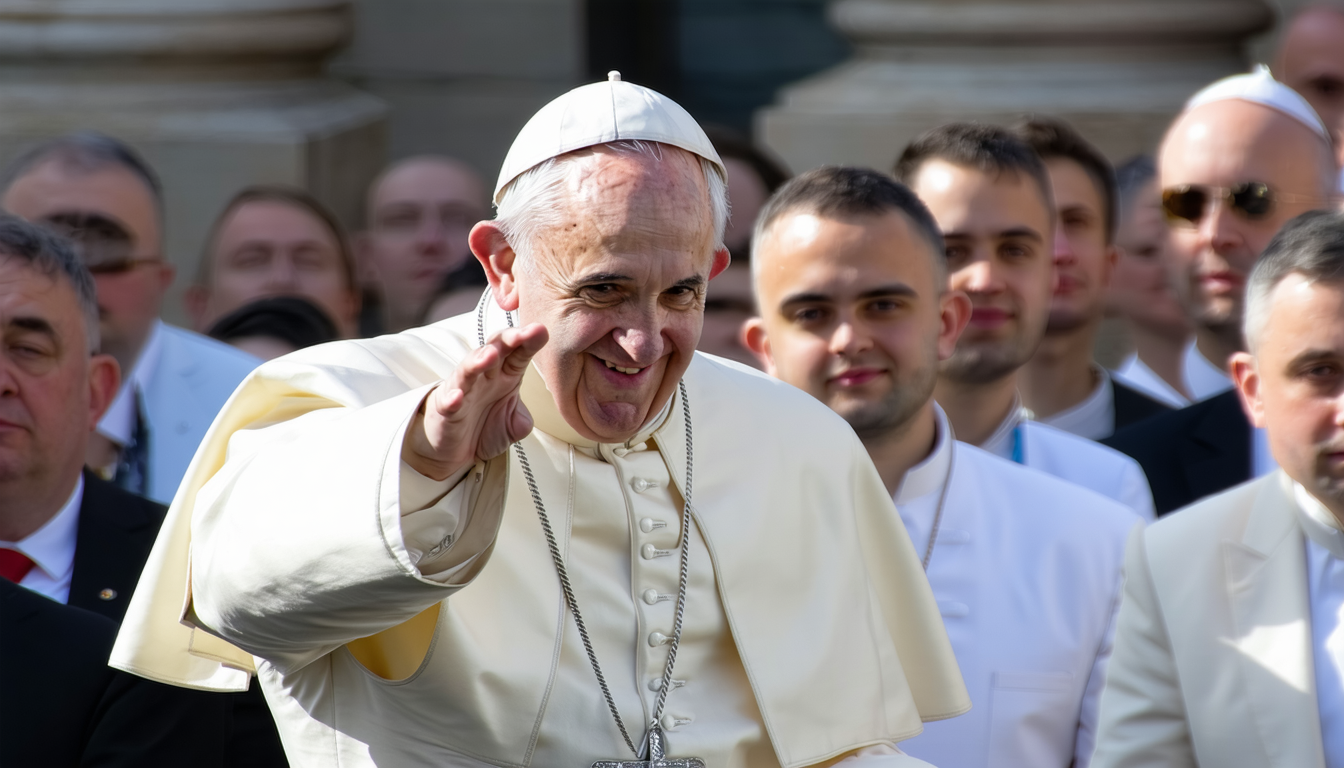

Pope Francis has long been a global moral voice, known for his humility, progressive ideas, and commitment to social justice. Yet today—well, actually as of early 2026—the Vatican has shifted its spotlight to his successor, Pope Leo XIV. It’s a bit jarring, isn’t it? One moment you’re thinking “Pope Francis today,” and the next, the narrative has moved onto Leo XIV. But that’s the current reality: Pope Francis passed away on Easter Monday, April 21, 2025, ushering in a new chapter in Vatican affairs.
This article ventures into the latest developments surrounding Pope Leo XIV and Vatican activities, clarifying the timeline and unpacking key themes—from internal court decisions and reform signals to controversy and diplomacy. Let’s navigate the present-day Vatican landscape—where the legacy of Francis lingers, but the dynamics are very much shaped by Leo XIV.
Who is Pope Leo XIV? A Transition that Matters
When Pope Francis died in April 2025, Cardinal Jorge Mario Bergoglio completed a twelve-year papacy that reshaped the tone of the Church’s modern engagement. Just over a month later, on May 18, 2025, his successor was inaugurated in a grand ceremony attended by some 200,000 faithful in St. Peter’s Square. That moment marked not just a change in figure, but a moving forward of a papal legacy.
Though new, Leo XIV has offered signs of both continuity with Francis and emerging reforms. He released Dilexi te on October 4, 2025—a continuation of Francis’s focus on the poor—served as his first apostolic exhortation and underscores his pastoral priorities.
Vatican Reform & Liturgical Tensions
January of 2026 brought significant internal shifts. In a consistory held on January 8, Pope Leo XIV defended restrictions on the old Latin Mass, asserting the reformed liturgy as the primary expression of Roman Rite unity. It’s a move intended to forge coherence, though it clearly unsettled traditionalist circles.
Then, on January 7—just ahead of that consistory—he signaled a readiness for reforms now that the Holy Year had ended. This might signal his openness to structural changes in Vatican governance.
Justice, Abuse, and Vatican Governance
On January 29, Leo XIV addressed the Dicastery for the Doctrine of the Faith, emphasizing truth, justice, and charity in clerical abuse cases. Notably, he kept the Pontifical Commission for the Protection of Minors functionally separate, suggesting a stroke of caution. Still, his remarks acknowledged survivors and ongoing reform.
It’s an interesting contrast: under Francis, the Commission had been integrated to signal greater pastoral focus. Now, Leo splits tribunal and pastoral functions—maybe a sign that he is recalibrating leadership style within the Church.
External Relations and Global Witness
A Call for Peace
On January 27, Holocaust Remembrance Day, Pope Leo XIV delivered a heartfelt plea for an end to antisemitism and prejudice. His message blended continuity of the Church’s interfaith outreach with new emphasis on vigilance against mass hate.
Then, in a rare political intervention, Leo XIV criticized a reported U.S. plan to engineer a regime change in Cuba—calling it “troubling” and urging diplomacy over aggression. It signals his willingness to speak out against geopolitical schemes.
Diplomacy from India to SSPX
Diplomatic ties are in motion too. Kerala Chief Minister Pinarayi Vijayan received a Vatican invitation to meet the pope in March 2026, suggesting soft power outreach and regional engagement.
Meanwhile, Church unity faced turbulence as the traditionalist Society of St. Pius X (SSPX) announced plans to consecrate bishops without papal approval—echoing a 1988 crisis. The Vatican is pressing dialogue but acknowledging the gravity of the breach.
Legal Storm: Vatican in the Spotlight
The Vatican’s “trial of the century” continues to unfold, with fresh scrutiny being cast on four secret decrees issued by Pope Francis in 2019–2020, granting security forces investigatory powers without judicial oversight. Defense attorneys argue these decrees undermined defendants’ rights; this dispute now takes center stage in the appeal phase.
This case isn’t just high drama—it’s a structural test of Vatican legal norms and transparency itself.
Looking Ahead: Trends and Transitions
What patterns are emerging under Leo XIV so far?
- Reform with restraint: Signaled openness, but cautious and institutionally grounded.
- Managing tradition: Restricting old rites, perhaps in service of unity—or to redefine what that unity looks like.
- Global engagement: Balanced by outreach and pro-peace diplomacy, yet firm on theological fidelity.
- Justice-focused leadership: Folding abuse and legal systems in new, cautionary ways.
- Institutional credibility: Facing challenges from SSPX and legal scrutiny alike.
Conclusion
Pope Leo XIV’s papacy is far from static—it marks the Vatican’s navigation from Francis’s era into a more legally cautious, institution-defining moment. He faces inherited challenges and ongoing crises, yet also the opportunity to stake a leadership brand that balances poise, pastoral care, and reform-minded governance. The story unfolding today is not Pope Francis’s anymore, but his legacy undoubtedly ripples through Vatican affairs. As we track these shifts, it’s clear: the modern papacy remains a dynamic storm of faith, governance, diplomacy, and transformation.
FAQs
Q: Is Pope Francis still alive or leading the Vatican?
No, Pope Francis passed away on April 21, 2025. His death marked the beginning of Pope Leo XIV’s papacy.
Q: Who is Pope Leo XIV and when did he begin his pontificate?
Leo XIV assumed the papacy after Francis’s death and was officially inaugurated on May 18, 2025, in a ceremony attended by hundreds of thousands.
Q: What are the main reforms or changes under Leo XIV?
He has signaled openness to reforms post-Holy Year, restricted the old Latin Mass for unity purposes, and made cautious changes in handling clergy abuse and institutional justice.
Q: What controversies does Pope Leo XIV face currently?
Key disputes include SSPX’s unauthorized bishop consecrations and ongoing trials scrutinizing Francis’s secretive decrees granting judicial powers to Vatican prosecutors.
Q: What is Pope Leo XIV’s global stance on current affairs?
He has condemned antisemitism on Holocaust Remembrance Day and criticized U.S. interventionist policy toward Cuba, advocating for peace and diplomacy over conflict.
Q: Is the Vatican holding dialogues with SSPX?
Yes, although the SSPX’s announcement to consecrate bishops without papal consent poses a significant unity challenge, the Vatican remains committed to dialogue.







Leave a comment