
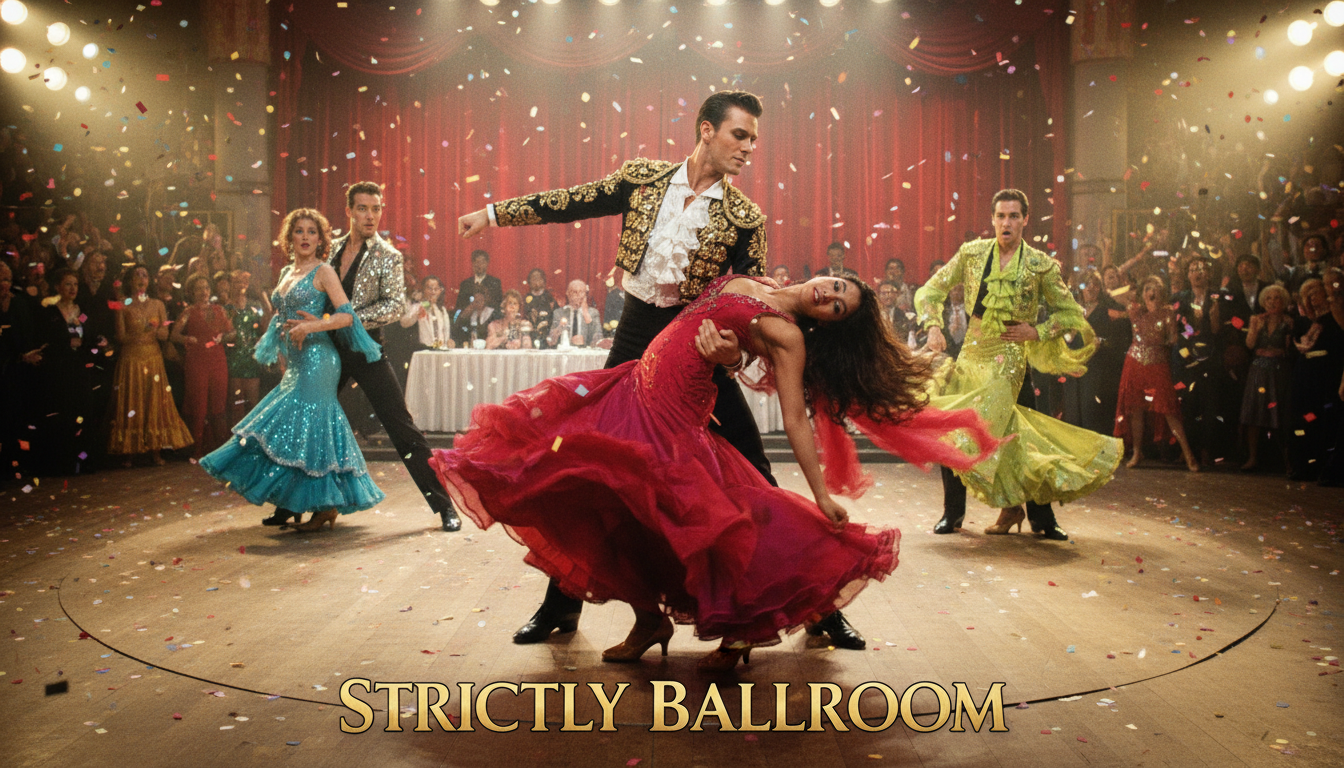

Baz Luhrmann’s movies are instantly identifiable. They dazzle with sumptuous visuals, bold soundtracks, and theatrical flair. If you want a director who blends romance, chaos, and spectacle into unforgettable cinema, that’s Luhrmann. His films aren’t just watched—they’re experienced.
The Signature Style of a Visionary
Baz Luhrmann doesn’t do “normal.” His style smacks you in the face—in the best way. Imagine cinematic slideshows that feel more like musicals on overdrive. He blends period settings with modern vibes. For instance, Romeo + Juliet pumps Shakespeare with rap, guns, and MTV. Moulin Rouge! turns early 20th-century Paris into a pop-art fever dream. And The Great Gatsby dazzles Jazz Age excess with neon glow and modern beats.
This isn’t just fancy decoration. It’s storytelling through moods, textures, and machines humming with neon. The visual exuberance, frenetic editing, and genre mash-ups create emotional arcs that feel practically wired into your nervous system.
“Everything is heightened. Colors, music, love—everything’s turned up to eleven.”
A quote like that captures how Luhrmann tilts the emotional dial. His films create worlds where every moment pulses with stylized energy.
A Quick Look at Key Films
Romeo + Juliet (1996)
Luhrmann reimagines Shakespeare’s classic with modern guns, neon signs, and a killer soundtrack. The dialogue remains intact but gets popped into slick Miami-like settings. It’s violent yet poetic, chaotic but deeply romantic. This was Luhrmann saying: “Yes, you can hear Shakespeare in a mall.”
Moulin Rouge! (2001)
Lavish, campy, romantic. It breaks the fourth wall, throws in pop hits like Madonna’s Like a Virgin, and tells a tragic love story inside a Paris nightclub. It’s melodrama meets nightclub revue, where every ballad is belted to operate on dream logic. You don’t just watch Satine and Christian fall in love—you feel it in your bones.
Australia (2008)
A sweeping epic set against the backdrop of World War II and Australia’s rugged Outback. Here, Luhrmann shifts tone without sacrificing style. The romance remains epic, the landscapes grand, and the story rooted in history and the real harshness of colonial and wartime tensions. It shows he can stretch beyond cabaret fantasy to real-world drama.
The Great Gatsby (2013)
Perhaps his most unapologetically stylish film. Gatsby’s parties glow with chandeliers, his mansion dazzles through cinematic oversaturation, and the jazz age sloshes together with dubstep beats. It’s classic F. Scott Fitzgerald, but if it got shot through a neon prism and remix glitch.
Elvis (2022)
Luhrmann takes on the King. This biopic thumps with Elvis’s music, angle finishes, and his complex life with Priscilla and Colonel Parker. It’s a lifetime in flash, beat-cut edits, and hyper-real performance, underlined by modern production and stylistic modernity. Luhrmann here continues his remix approach—only now the icon is real, not fictional.
Why Luhrmann’s Style Works
Emotional Overload Meets Clarity
That weight of color and cutting-edge sound pushes emotional buttons. But Luhrmann is careful. His chaos is organized—it’s like emotional highlighter. He knows when to slow it down, let a lyric land, or sit in silence, so the next chorus feels explosive rather than numbing.
Nostalgia, Reimagined
He doesn’t just show the past—he reboots it. Gatsby isn’t trapped in the 1920s. He steps into a remixed time machine bridging past and present. Nostalgia meets now. That’s why the music and costumes feel familiar and fresh.
Theater in Film
You sense the stage in every frame—costumes, choreography, design. But it lives on a screen. This theatrical carryover gives each scene an electric edge. He pushes theatricality past the threshold of screen into sensory immersion.
Real-World Impact and Reception
Box Office & Popularity
His films aren’t critics-only. Moulin Rouge! earned Oscar buzz and box office returns. The Great Gatsby surprised critics and pushed strong modern soundtrack sales. Elvis drew fans old and new, spurring renewed interest in the icon’s catalog. In short: style can still sell classics and fresh fans alike.
Industry Influence
Plenty of music videos, fashion shoots, and newer directors emulate that saturated, heightened look. It flips the notion that mainstream cinema must shy from spectacle. Luhrmann says spectacle is the point. Feels kinda infectious.
Mixed Reviews—in a Good Way
Some critics argue his style overwhelms substance. Maybe. But the argument is exactly his point. He’s not subtle. He’s immersive. The theatrical chaos is the substance. Critics and fans often debate if a Luhrmann movie lands emotionally—because it lands so hard.
Inner Mechanics: Floats and Layers of a Luhrmann Film
Visual Density
Costumes aren’t just period-accurate—they’re staged for maximal drama. Think emerald gowns, glowing motifs, and hyper-nature. Every set appears oversized and kinetic, so your eyes dart, linger, and gasp.
Musical Collage
His soundtracks mash eras, pop and orchestral, classic and remix. That’s not just fan service. It’s the material language of his worlds. You hear the emotion before the dialogue hits.
Pacing That Feels Musical
Scenes ebb and surge like songs. He gravitates toward arcs closer to suites than scenes. Sometimes a shot lingers. Other times everything swings in hypercut. It feels like structure guided by rhythm rather than standard act breaks.
Character Through Spectacle
Characters are defined by the worlds they inhabit—the glam, the grit. You learn Juliet through her neon world. You sense Gatsby’s yearning in his glittering mansion. That’s style shaping depth.
Brief Mini-Case: Moulin Rouge! as a Style Capsule
In Moulin Rouge!, the song Come What May isn’t just a ballad. It’s a soul erupting in theatrical breakaway. The staging blows past realism. It’s the height of camp and emotion living in the same frame. That song scene alone illustrates Luhrmann’s method—emotion driven by visual-musical unity. The result: you swallow heartache with glitter in your lungs.
Then there’s the green fairy sequence—hallucinatory, bursting-at-seams, drenched in visual syphilis. It’s pure expression. Subjective cinematic dream. And that’s a telling stretch of what Luhrmann does: he invites you to dream structurally and stylistically, not just follow a plot.
Why People Keep Watching
- Sensory Cinema: It’s literal eye candy and ear candy.
- Romance, Exaggerated: Love in Luhrmann’s hands becomes mythic, tragic, euphoric.
- Contrast of Worlds: Present crosses past, appearance meets emotion.
- Personalized Spectacle: You feel invited into delirium, not just shown.
Wrapping It Up
Baz Luhrmann’s films aren’t shy. They invite you into worlds that pulse with color, alter your sense of time, and remix nostalgia with outsiders’ beats. He pairs chaotic romance with calculated structure—always theatrical, always immersive.
If you love cinema that looks alive—like someone painted and reshot reality in neon—you’ll understand why he’s called a visionary.
FAQs
What makes Baz Luhrmann’s films so visually distinctive?
His visuals combine saturated colors, elaborate sets, and opulent costumes that heighten emotion and drama. He treats every scene like a theatrical production, not just a sequence of shots.
Does Luhrmann rely more on style than story?
While his style is bold, it’s purposeful. Emotional arcs are tied into spectacle. Characters and themes emerge through visual-musical themes, not just dialogue.
Which film best showcases his style?
Moulin Rouge! captures his approach most purely: modern music in a century-old setting, extreme visuals, and heightened romance—all pushed through a kaleidoscopic lens.
Why are modern directors influenced by him?
Because he proved that stylized cinema can be commercially viable and emotionally resonant. His success encouraged a new wave of directors to embrace bold design, theatrical editing, and cross-era mashups.
Can you recommend a Luhrmann film for newcomers?
Romeo + Juliet is one of the easiest entry points. It pairs the familiar—Shakespeare—with the unexpected—guns for swords, neon signs, pulsing edits. It’s edgy but strangely accessible.
These films are more than movies—they’re sensory trips, born from a distinct vision that values emotion, style, and spectacle in equal, electrifying balance.







Leave a comment