
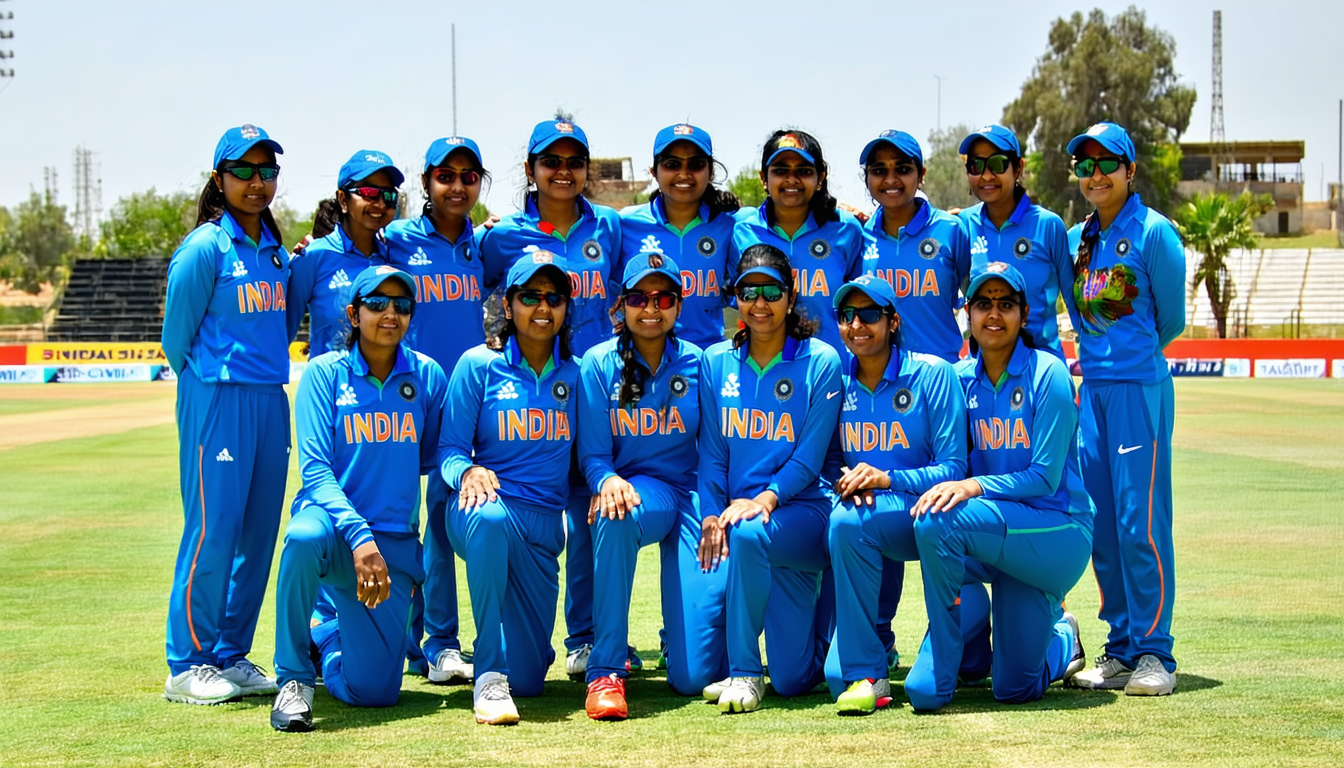

For decades, the India women’s national cricket team lingered on the sidelines of sports conversations, overshadowed by their male counterparts. That’s just being real. But over the past ten or fifteen years, something’s changed. People started tuning in. Social feeds buzzed during big games. Names like Mithali Raj and Harmanpreet Kaur became familiar, not just to die-hard fans but to families who once could only name Tendulkar or Kohli. It’s not a perfect fairy-tale, and, honestly, there are still rough patches—funding issues, recognition gaps—but the women’s team has earned a genuine, roaring spotlight.
Building Blocks: Players Who Defined the India Women’s National Cricket Team
Trailblazers and Modern Icons
Going back, few outside hard-core circles knew of Diana Edulji or Shanta Rangaswamy, pioneers in the ’70s when the team played its first official Test. The infrastructure was, to put it gently, makeshift. However, by the late 1990s and early 2000s, things began tilting.
- Mithali Raj: The longest-serving captain, Raj is the world’s top run-scorer in women’s ODIs. Her technique and patience are—honestly—impeccable. But more so, she’s a symbol: proof that you can be soft-spoken and still lead with an iron will.
- Jhulan Goswami: At nearly six feet, her pace and bounce made her one of the deadliest seamers. She’s taken more ODI wickets than any other woman, period.
- Harmanpreet Kaur: The all-rounder who brought aggression and big-hitting to the fore, especially with that jaw-dropping 171* against Australia in the 2017 World Cup semi-final—something even now sparks debates: best ever by an Indian in a World Cup?
Beyond these three, a vibrant crop—Smriti Mandhana’s left-handed elegance, Shafali Verma’s audacity at the top, Deepti Sharma’s cunning with bat and ball—signals that Indian women’s cricket isn’t a one-generation story. It’s building depth, although, let’s be honest, transitions don’t always go smooth.
Emerging Talents and Diversity
Younger players like Richa Ghosh and Pooja Vastrakar are shaking up expectations. Fans and experts sometimes argue—should selectors focus more on young blood or stick to proven names? Diversity in region and background is finally creeping in, too, though not as quickly as many might wish.
Stats and Records: India Women’s Standings in World Cricket
Landmark Performances and Consistent Progress
The team’s record is a nuanced mix of breakouts and near-misses. It’s not always numbers that tell the full story, but still—they matter.
- World Cup Finals: India reached the ODI finals in 2005 and 2017. The 2017 run, especially, is widely seen as a watershed moment, drawing massive TV ratings—unheard-of for women’s matches until then.
- Test Cricket: Only a handful of teams play women’s Tests these days. India, despite limited matches (fewer than a dozen since 1976!), remain unbeaten at home for over two decades.
- T20I Growth: The introduction of the Women’s T20 Challenge boosted T20 credentials. Now with the Women’s Premier League (WPL), the team’s T20 bench strength is visibly stronger.
Mind-Bending Numbers (But Not Everything…)
- Mithali Raj: Over 7000 ODI runs
- Jhulan Goswami: 250+ ODI wickets
- Smriti Mandhana: Fastest Indian to 2000 T20I runs
India remains in the world’s top 5 across formats, especially strong in ODIs.
“The Indian women’s team’s progress is a lesson in how persistence, investment, and public support can upend old sporting orders,” says cricket analyst Snehal Pradhan. “There’s still a gap with Australia and England, but that gap’s closing, bit by bit.”
Notable Achievements: Moments That Redefined Expectations
Turning Points & Iconic Wins
A few moments live on in every Indian fan’s memory:
- 2017 World Cup Semi-final vs. Australia: Harmanpreet Kaur’s devastating 171* changed global perceptions of India’s power-hitting.
- 2020 T20 World Cup Final: Despite falling to Australia, India’s ride to the MCG final drew a record crowd for a women’s cricket match.
- Test Matches Against England and Australia (2021): Both ended in dramatic draws—showcasing India’s grit and marking the squad’s return to red-ball relevance.
Beyond headline matches, the team’s regular victories over top ICC opponents (and, to be fair, some frustrating slip-ups versus lower-ranked teams, which fans still grumble about) highlight both their promise and the unpredictability inherent to the sport.
Domestic Leagues: WPL, Challenger Trophies & More
With the launch of the WPL, India’s domestic women’s cricket has taken a leap of faith. More young cricketers than ever are now picking up bats and dreaming big—sometimes you hear stories of girls from villages skipping chores to practice, which sounded almost, um, unrealistic a decade ago.
Still, some argue WPL leans on star power and big cities. Will it build grassroots cricket or just entertain? The answer is…well, evolving.
The Road Ahead: Challenges and Opportunities
Areas for Growth
- Infrastructure: Facilities have improved but there’s still lack of high-quality coaching for girls at the district level.
- Recognition & Pay: Compared to men, there’s still a significant disparity in contracts and match fees. It frustrates players and fans alike.
- Media Coverage: It’s better, but not yet on parity with men’s matches. Coverage still spikes only during big tournaments.
Social Impact and Long-term Shifts
Girls watching Mandhana or Shafali on TV have new dreams now—cricket isn’t just a “boy’s thing.” There’s a slow but real shift in parental attitudes. As one coach in Mumbai, a bit gruffly, told me after a local final: “These girls play hungrier than the boys. Maybe they know…it’s still not easy.”
Different Views, Unpredictable Outcomes
Some experts say WPL and international exposure will close the Australia-England-India gap in a few years. Others are less sure—pointing out that until schools and rural academies receive consistent investment, only a small slice of Indian talents make it to the top.
No one quite agrees on what success will look like—or how fast it’ll come. That, maybe, is why fans keep watching.
Conclusion: More Than Just Numbers
The India women’s national cricket team, while marked by statistics and trophies, represents a bigger shift in Indian society. Every run and wicket is, at its heart, a story—of persistent effort, changing mindsets, and dreams fuelled against the odds. The journey’s not finished, and sometimes it stumbles, but the team’s rise has forced a whole country to look again at what’s possible.
FAQs
Q1: Who are the leading run-scorers for the India women’s national cricket team?
Mithali Raj tops the list in ODIs, with Smriti Mandhana and Harmanpreet Kaur among the current stars racking up significant runs across formats.
Q2: What are some major achievements of the team?
Highlights include reaching the Women’s World Cup finals in 2005 and 2017, making the 2020 T20 World Cup final, and holding strong Test records at home.
Q3: How has the Women’s Premier League (WPL) changed Indian women’s cricket?
The WPL has boosted visibility and given young talents opportunities alongside global stars, although some debate whether benefits are evenly spread.
Q4: Is there pay parity between India’s women and men cricketers?
Not yet. Recent years brought some improvements, but considerable pay gaps remain in both contracts and match fees.
Q5: Who are some up-and-coming players to watch?
Names like Shafali Verma, Richa Ghosh, and Pooja Vastrakar have created buzz—not just for skills but for the new energy they bring to the side.
Q6: Where can fans follow updates on the women’s team?
Major tournaments air on sports channels and streaming platforms, and the BCCI regularly updates fixtures, scores, and team news on its official website and social media.





Leave a comment